
Commonly called ‘intoeing’ or ‘pigeon toes’
Intoeing means that when a child stands, walks or runs, their feet turn inward (toward each other) instead of pointing straight ahead or slightly outward.
This is commonly called ‘intoeing’ or ‘pigeon toes’.
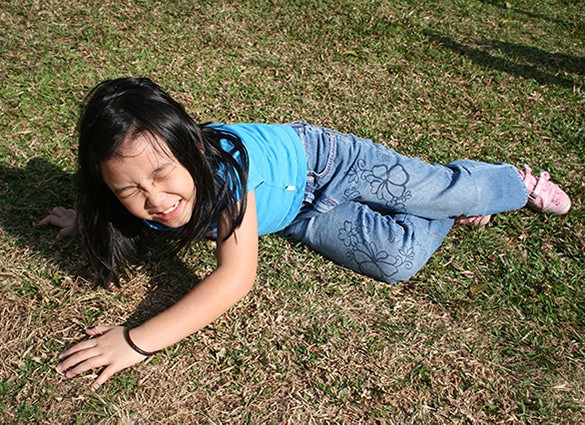
Intoeing is very common in young children and often causes some concern for parents. In many cases intoeing resolves without any treatment at all. However, in more noticeable or persistent cases, an intoed gait may cause young children to stumble or trip frequently during running or playtime activities or they may be unable to keep up with their peers in sport. Shoe fitting may also be difficult.
What causes intoeing?
There are three main causes of intoeing in healthy young children. They include metatarsus adductus (curved foot), internal tibial torsion (curved shin) or an internally rotated hip position.
- Metatarsus Adductus: in an infant the most common cause of an intoed foot position is congenital metatarsus adductus, in which the entire forefoot is turned inward and resembles a kidney bean shape. This is most likely caused by the curled-up position of the baby in-utero. It may affect one or both feet, and usually resolves spontaneously within 3 months after birth.
- Internal Tibial Torsion – in toddlers and young children an intoed gait can also be caused by an inward twist or curve of the tibia (shin bone). This may result from the baby’s position prior to birth or it may have a hereditary basis. Usually, this bony twist resolves during the baby’s first year and the leg bones will continue to straighten until the child is about 6-8 years old.
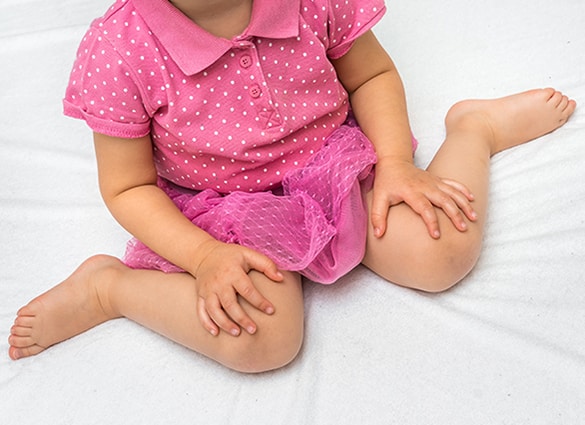
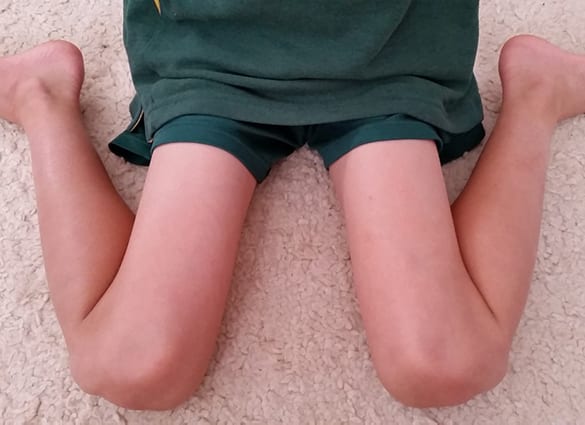
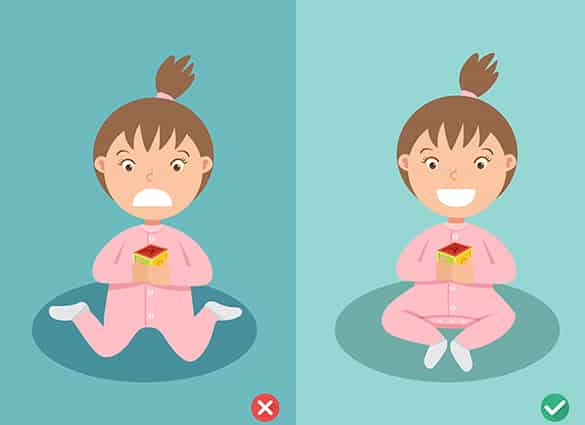
- Femoral Anteversion – an intoed gait is often due to an internally rotated hip position, in which the knees are turned inward toward each other.
How is intoeing treated?
Treatment for intoeing depends upon the cause of the intoeing. Treatments may range from no treatment at all, stretching and strengthening exercises, footwear advice, to short term bracing and orthoses.
What should I do if my child is intoeing?
If you are concerned about your child’s gait or foot posture, don’t hesitate to consult with our experienced Podiatrists for a comprehensive walking assessment and professional advice.